Laparoscopic (Keyhole) Surgery
Minimally invasive surgery through a few tiny cuts using a camera and fine instruments.
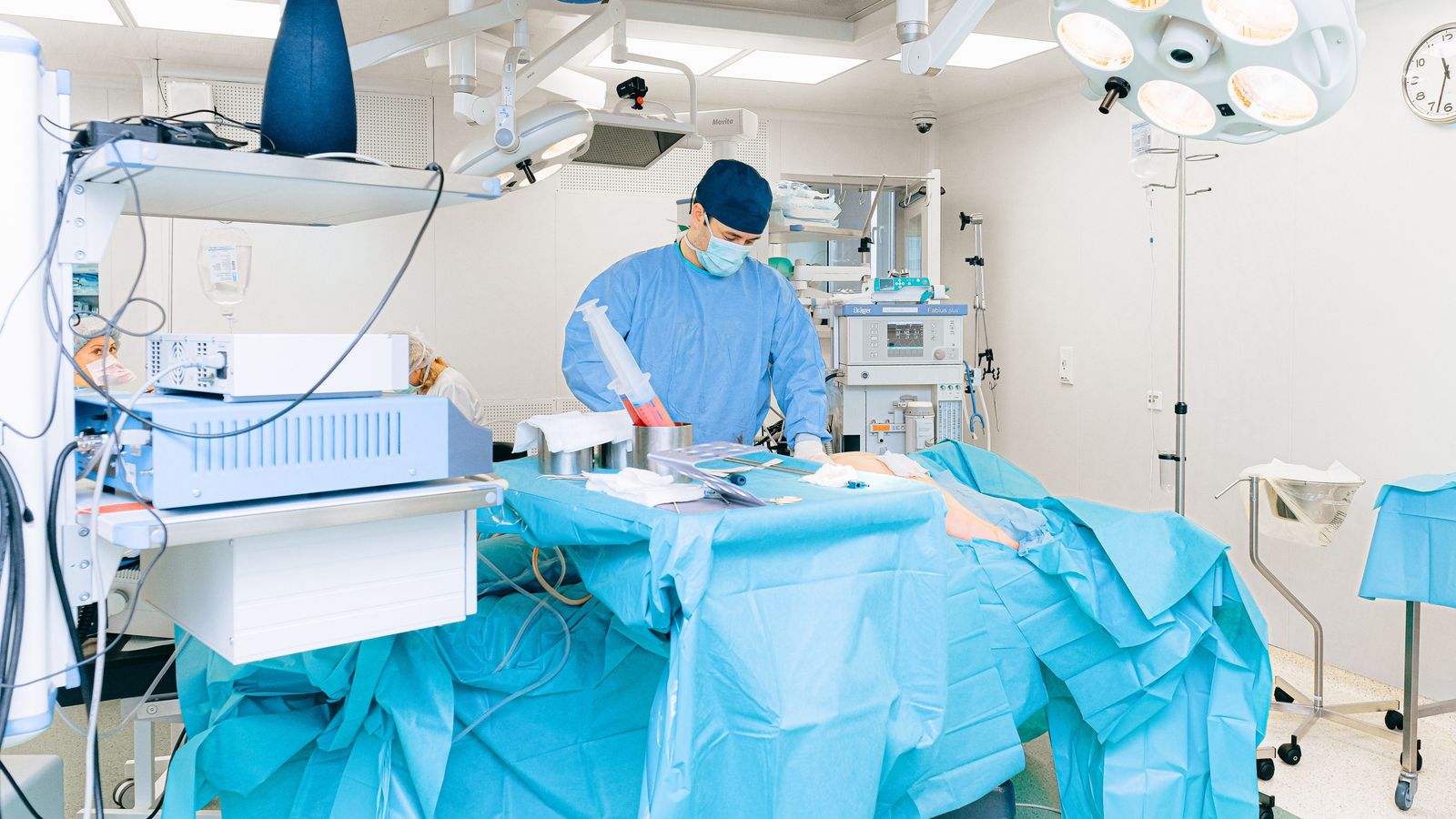
Laparoscopic (keyhole) surgery is a minimally invasive technique in which the surgeon operates through a few small 5–10 mm cuts using a camera and slender instruments, instead of one large incision. It allows precise surgery inside the abdomen with less pain, smaller scars, lower infection risk and a much faster recovery than traditional open surgery.
Laparoscopic surgery — also called keyhole or minimally invasive surgery — has transformed how many abdominal operations are performed. Instead of a single long incision, the surgeon works through a few small cuts guided by a magnified camera view. For patients this usually means less pain, smaller scars and a quicker return to normal life. Dr. Sujan Shrestha uses these techniques across a wide range of GI and abdominal wall procedures.
ल्यापरोस्कोपिक (किहोल) शल्यक्रिया भनेको ठूलो चिरा नगरी साना प्वालबाट क्यामेरा र सूक्ष्म औजार प्रयोग गरी गरिने शल्यक्रिया हो, जसमा कम दुखाइ र छिटो निको हुने फाइदा हुन्छ।
Overview
Overview. In laparoscopic surgery the abdomen is gently inflated with carbon dioxide gas to create working space. A thin telescope with a camera — the laparoscope — is passed through a small cut near the navel and sends a bright, magnified image to a screen. The surgeon then operates using long, fine instruments introduced through two or three further small ports, watching every movement on the monitor.
The magnified view and precise instruments let the surgeon carry out the same operation as open surgery — removing an organ, repairing a hernia or resecting diseased bowel — but without the large incision. Because the muscles and skin are disturbed far less, the body recovers more quickly. This same approach underpins advanced techniques such as robotic surgery, which builds on laparoscopic principles.
Conditions it treats
- Gallstones needing gallbladder removal (cholecystectomy)
- Inguinal, umbilical and incisional hernias
- Appendicitis (laparoscopic appendix removal)
- Colorectal conditions, including some bowel cancers
- Reflux disease and hiatus hernia (anti-reflux surgery)
- Diagnostic assessment of unexplained abdominal pain or masses
Key benefits
- Only a few small incisions instead of one long cut
- Significantly less post-operative pain
- Shorter hospital stay, often day-care or a single night
- Faster return to work and everyday activity
- Lower risk of wound infection and incisional hernia
- Minimal, barely visible scarring
- A magnified view that can improve surgical precision
How the procedure is performed
The operation is carried out under general anaesthesia. After the abdomen is inflated with carbon dioxide, the laparoscope is inserted through a small incision, usually at the navel. Two or three additional ports, each only 5–10 mm, are placed to admit the working instruments.
Viewing the magnified image on a high-definition screen, the surgeon performs the procedure — dissecting, sealing blood vessels, removing tissue or placing mesh — with precise, controlled movements. Any specimen is removed through one of the small openings, the gas is released and the tiny cuts are closed. If the surgeon judges it safer, an operation may occasionally be converted to open surgery; this is uncommon and always done in the patient's best interest.
Preparing for surgery
Before surgery you will have the relevant blood tests and scans, and an assessment of your fitness for anaesthesia. You will usually be asked to fast for about six hours beforehand. Tell your surgeon about all your medicines — especially blood thinners — and about conditions such as diabetes or heart and lung disease, so your care can be planned safely.
Recovery & aftercare
Recovery is usually faster than after open surgery. Many patients go home the same day or the next morning. Mild shoulder-tip or abdominal discomfort from the gas settles within a day or two. Most people resume light activity and desk work within a few days to a week, with the exact timing depending on the specific operation. Your surgeon will give tailored advice on lifting and exercise.
Risks & considerations
- Minor bleeding or bruising at the port sites
- Wound or chest infection (uncommon)
- Injury to nearby structures such as bowel, blood vessels or bladder (rare)
- Temporary shoulder-tip pain from the carbon dioxide gas
- A small chance of conversion to open surgery
- The usual risks associated with general anaesthesia
Frequently asked questions
Open surgery uses one large incision, while laparoscopic surgery works through a few small cuts using a camera and fine instruments. The keyhole approach generally means less pain, smaller scars and a faster recovery.
Yes. Laparoscopic surgery is well established and widely used. As with any operation it carries some risks, but in experienced hands it is very safe and often has fewer wound-related complications than open surgery.
Many abdominal operations can be done laparoscopically, but not all. The best approach depends on the condition, previous surgery and individual factors. Your surgeon will advise which method is safest for you.
Occasionally the surgeon finds dense scarring, bleeding or unclear anatomy and switches to open surgery for safety. This is uncommon and is always a careful decision made in your best interest, not a complication.
Many keyhole procedures are day-care or single-night stays, so patients often go home the same day or the next morning. The exact timing depends on the specific operation and your recovery.
Get a clear answer from a specialist
Dr. Sujan Shrestha (MBBS, MS, MCh) offers evidence-based, minimally invasive care for laparoscopic (keyhole) surgery and the full range of GI conditions.